
Scroll through the social media pages of most local contractors and you’ll start noticing a pattern pretty quickly.
The posts often look something like this: a seasonal promotion, a reminder to schedule service, or a limited-time discount. One company is advertising a furnace tune-up. Another is promoting a water heater installation special. A third is reminding people to book before winter arrives.
If you keep scrolling, the message rarely changes.
“Call today.”
“Schedule now.”
“Don’t miss this offer.”
If you run a service business yourself, this probably feels familiar. Most contractors communicate this way because it seems logical. When you want customers, you remind people to call. When business slows down, you run a promotion. When the seasons change, you advertise the service that matches the moment.
There’s nothing inherently wrong with that approach. Promotions have their place.
The problem is that when every message is promotional, customers eventually stop hearing anything distinctive at all.
From the homeowner’s perspective, every company starts to sound the same.
The Problem With Most Contractor Marketing
Imagine a homeowner searching for help with a heating problem.
They might look at several HVAC companies in their area. They may check Google results, browse social media pages, or read reviews. As they explore their options, they begin to see how each company communicates.
But what they often encounter is a long list of identical claims.
One company says they are reliable. Another says they are the best in the area. A third says they provide top-quality service. Nearly every post asks the customer to schedule today.
Eventually the messages blur together. The homeowner is left with several companies that all seem to be saying roughly the same thing.
When that happens, the decision rarely comes down to marketing at all. It usually comes down to convenience or familiarity. Maybe they choose the company that appears first in search results. Maybe they call the one a neighbor mentioned once. Maybe they simply recognize a name they have seen before.
In other words, the promotional messaging did very little to build meaningful trust.

Why Promotions Alone Don’t Build Trust
Promotions work best when trust already exists.
If someone already knows your company and has had a good experience with your work, a seasonal offer can be a helpful reminder. It reinforces an existing relationship. It can even encourage repeat business.
But when a homeowner has never interacted with your company before, a discount alone doesn’t answer the questions they care about most.
They are wondering things like:
- Does this company actually know what they’re doing?
- Will they explain the problem clearly?
- Are they honest about repairs versus replacements?
- Can I trust them inside my home?
A promotion cannot answer those questions.
Education can.
This is where many local service businesses miss a major opportunity. The very expertise they use every day on job sites could also be used to build trust long before a customer ever makes a call.
What the Most Successful Local Businesses Do Differently
If you pay attention to the service companies that grow into regional leaders, you’ll often notice a subtle difference in how they communicate.
They still promote their services, of course. They still advertise seasonal maintenance and installations. But those messages are only part of their communication.
Alongside promotions, they spend time explaining things.
They explain why certain systems fail after a number of years. They walk homeowners through the warning signs of common problems. They help people understand what maintenance actually does and why it matters.
An HVAC company might explain the early signs of a furnace failure.
A plumber might discuss why water heaters tend to break down earlier than expected.
An electrician might show homeowners what outdated electrical panels look like and why they can become dangerous.
None of these explanations are direct sales pitches. Yet they accomplish something more important.
They demonstrate expertise.
Over time, that expertise becomes associated with the company that consistently shares it.
The Local Expert Strategy Explained
This approach can be summarized in a simple idea:
Teach first. Sell second.
Instead of filling every communication channel with promotions, the business focuses on helping customers understand their problems. The goal is not immediate conversion. The goal is clarity.
When a company consistently explains the issues homeowners care about, it begins to occupy a different position in the customer’s mind. It stops looking like just another contractor asking for work. Instead, it begins to look like a knowledgeable guide.
That shift may seem subtle, but it has a powerful long-term effect.
The company becomes associated with understanding, not just selling.
Why Education Builds Trust Before the Phone Rings
Many businesses assume the customer relationship begins when the phone rings. In reality, the relationship often starts much earlier.
Homeowners frequently research problems before contacting anyone. They search online, watch short videos, read explanations, and try to understand what might be happening in their home.
When a contractor consistently provides clear explanations online, something interesting begins to happen. People start recognizing that company as a reliable source of information.
They might remember watching a short video about furnace maintenance. They might recall a helpful explanation about common plumbing failures. By the time they actually need service, the company already feels familiar.
Trust has started forming before the first conversation ever takes place.
This is why educational communication can be so powerful for local service businesses. It allows expertise to reach customers long before they are ready to book a job.
What Educational Content Looks Like for Contractors
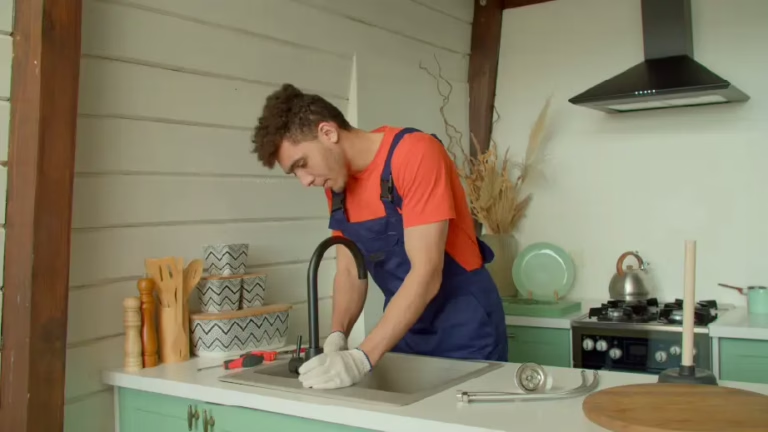
The idea of “content” can sometimes feel abstract or complicated. In reality, educational communication often starts with very simple questions.
Every contractor answers the same types of questions week after week.
Homeowners ask why their systems are making strange noises. They ask whether a repair is worth the cost. They want to know how long something should last or what warning signs to look for.
Each of those questions can become a short explanation.
A plumber might create a simple explanation about why pipes freeze during cold winters. An HVAC technician might discuss how dirty air filters affect system performance. An electrician might explain the risks of outdated wiring in older homes.
These explanations are not complicated marketing strategies. They are simply clear answers to the questions customers already ask.
And those answers showcase something that promotions cannot: real expertise.
Why Most Contractors Struggle With Consistency
If educational communication is so valuable, why don’t more businesses do it consistently?
In most cases, the issue isn’t knowledge. Contractors already have the expertise. The issue is structure.
Marketing often happens in bursts. A business posts several ideas in a short period of time, then gets busy with work and stops entirely. Weeks or months go by without any communication at all.
Eventually someone says, “We should start posting again,” and the cycle repeats.
This pattern makes it difficult for educational content to build momentum. Without consistency, even the most useful explanations quickly disappear from view.
The Real Solution: A Communication System
Sustainable communication rarely happens through improvisation.
Businesses that maintain consistent educational visibility usually rely on a structured process. They identify the topics customers care about, plan explanations around those topics, and produce content in organized batches rather than random bursts.
This type of structure removes much of the friction that normally stops businesses from continuing.
Instead of constantly wondering what to post, the company simply follows a predictable production cycle. Topics are planned ahead of time, explanations are recorded in batches, and the resulting content is edited and released steadily.
Over time, those explanations accumulate into a library of helpful knowledge that customers can easily find.
And that library gradually strengthens the company’s reputation as the local expert.
Practical First Steps Contractors Can Take
For contractors who want to begin shifting toward an educational approach, the first step is surprisingly straightforward.
Start by paying attention to the questions customers ask most often. These questions are usually the exact topics homeowners search for when they encounter a problem.
Write them down as they come up during service calls.
Questions like:
- Why is my furnace making this noise?
- How long should a water heater last?
- Is it better to repair or replace this system?
Each question represents an opportunity to explain something valuable. Even a short explanation can help a homeowner understand a problem more clearly.
Over time, those explanations begin to change how customers perceive the business.
Instead of seeing another contractor asking for work, they begin to see a knowledgeable professional who consistently helps people understand what’s happening in their homes.
Teaching Builds the Authority Customers Remember
The local businesses that grow steadily over time rarely rely on constant sales messages alone.
They build recognition through clarity. Customers repeatedly encounter their explanations, their guidance, and their expertise. When the moment comes to choose a service provider, the decision feels easier.
People tend to choose the business that already helped them understand the problem.
That is the essence of the Local Expert Strategy.
Teach first. Sell second.
Over time, education builds something that promotions alone never can: trust.
Explore How We Work
Many expert-led businesses already have the knowledge needed to educate their customers. The challenge is rarely expertise. It’s consistency.
At Moonward Media, we design and operate structured video production systems that help expert-led businesses communicate their knowledge clearly and consistently over time.
If your business values education and wants a reliable way to share that expertise with your audience, you can explore how we work or start a conversation about building a production system that supports your long-term communication.
Ready for a More Structured Approach to Video?
If you’re looking for a reliable, long-term production system to support your expertise, let’s explore whether we’re the right fit.

Want some quick help?
Need help figuring this out? We built Cosmo — your free AI assistant to help plan your video content strategy and optimization.
Sign up below to access it.